
Secondary
Adolescence needs challenge, reality and a community that trusts the process.
Secondary
Learning is no longer confined to the classroom: it becomes a relationship with the world, with judgement and with real responsibility.
Adolescence calls for a proposal that is demanding and deeply human at once. It needs space to think, work, contrast ideas, assume consequences and discover that one’s own voice can carry weight.
Read more about this stage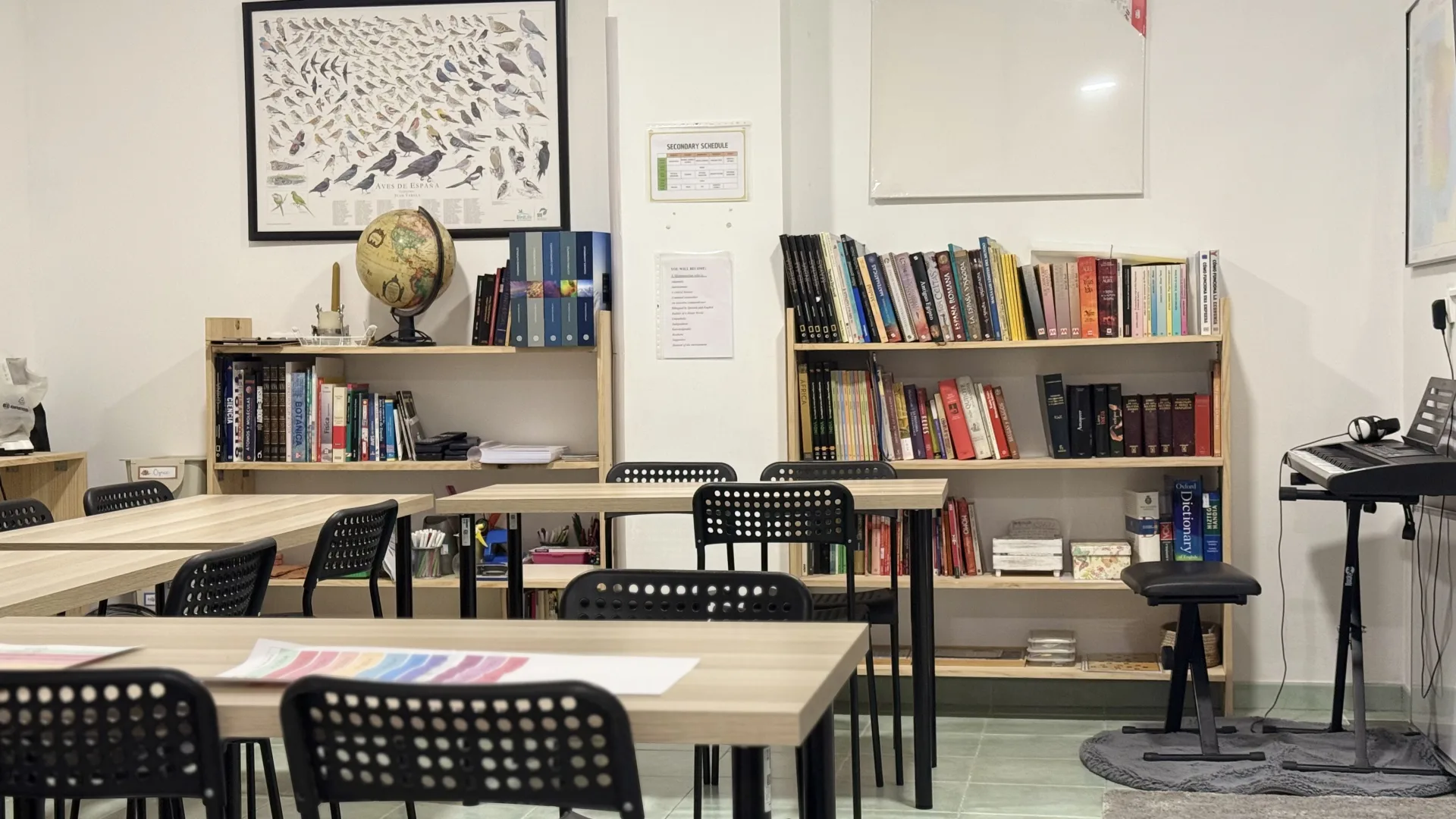
This stage accompanies a more critical mind, a more complex autonomy and an identity that is being refined.
The proposal is sustained through experiences that ask for presence, judgement and responsibility.

Critical thinking
Students learn to argue, review, sustain a position and contrast it honestly.
Educational project →
Shared responsibility
Community stops being just a context and becomes a space where each person contributes, responds and finds their place.
Educational project →
Connection with reality
Learning gains meaning when it is linked to projects, challenges and situations that truly matter.
Educational project →The environment incorporates real work, demanding dialogue and a broader opening to the outside world.
In Secondary, preparing the environment is not only about organising materials; it is about organising experiences. Adolescents need time for depth, tasks with consequences, contact with reality and a community where their contribution matters.
Life in the environment
That is why guidance becomes more deliberate, more dialogic and more connected to personal and social responsibility.
Maturity does not appear by accident; it needs truth, challenge and a context that takes it seriously.
An adolescence guided to know oneself better, live meaningfully with others and open out to the world with judgement.
The centre is no longer only what is learned, but also who one becomes through learning.
Longer processes
Sustaining projects and responsibilities over longer periods helps form judgement and perseverance.
Dialogue and guidance
The adult does not direct every step, but accompanies with challenge, listening and clarity.
Preparation for life
The stage seeks to help adolescents enter adult life with greater presence, responsibility and an inner sense of direction.
Frequently asked questions about this stage
A first map to guide the conversation before visiting the school.
How is adolescent autonomy supported?
Through structure, conversation, real responsibilities and close follow-up of each personal process.
What place do projects have?
They give learning context and connect critical thinking, research and relationship with reality.
How is academic continuity prepared?
Content, work habits, personal judgement and guidance for next steps are all supported.
The best way to understand a stage is to see it in motion.
We invite you to visit the school and speak with the team about your family moment.